Patricia Highsmith Fan Site
The Undisputed MasterpiecesThe Talented Mr. Ripley (1955): Widely considered her greatest achievement. Critics praise it for creating one of literature's most enduring "amoral" protagonists and for its perfect pacing.Strangers on a Train (1950): Her debut novel, immortalized by the Hitchcock film. Critics rank it highly for its tight plotting and the disturbing "transfer of guilt" theme.The Price of Salt (also known as Carol) (1952): Praised for its literary depth and its historical significance as a lesbian romance with a happy ending, moving it beyond the "suspense" genre.
The "Darker" Masterpieces (Cult Favorites) These books are often cited by "Highsmith purists" as her most artistically daring or psychologically grueling work:Edith’s Diary (1977): Frequently called her most ambitious and disturbing work. The New Yorker famously cited it as her "best work to date" upon its release. It is a slow-burn psychological disintegration that critics find more horrifying than her murder mysteries.The Cry of the Owl (1962): Often listed as her "best non-Ripley" book. Critics admire its unsettling exploration of voyeurism and the way it subverts the typical hunter/prey dynamic.Deep Water (1957): Highly regarded for its suffocating domestic tension and its portrayal of a "perfect" husband who is also a killer
The "Ripliad" (Ranked) For the five Tom Ripley novels, critics generally follow a downward trajectory of quality:The Talented Mr. Ripley (The Gold Standard)Ripley’s Game Third in the series, but often ranked second by critics for its brilliant "moral corruption" plot.Ripley Under Ground Praised for its exploration of art forgery and Ripley's machiavellianism.Ripley Under Water / The Boy Who Followed Ripley Generally considered "for fans only," with many critics finding them slower and less focused.
The Underrated & Sub-par Not all of them can be winners:Highly Rated/Underrated: The Tremor of Forgery (often cited as her most "literary" and understated novel) and This Sweet Sickness.The Low Tier: Novels like A Dog’s Ransom, Found in the Street, and her final novel Small g: A Summer Idyll are consistently ranked at the bottom. Critics often describe these as "sloppy" or "half-formed" compared to her mid-century work.
Visit The Talented Mr. Ripley for all things of Mr. Ripley.
Plotting and Writing Suspense (1966) This is Highsmith’s only non-fiction book about her craft. This is afascinating read. She explains how she develops a "germ" of an idea and why she prefers the "criminal's point of view" over the detective's.
Patricia Highsmith's Comic Book Contributions
The Black Terror This was her most consistent assignment. The Black Terror was a "nemesis of crime" who gained super-strength from a chemical called "formic ethers." Highsmith wrote dozens of scripts for this character, which appeared in Exciting Comics.
Fighting Yank She wrote for this patriotic superhero who drew strength from the ghost of his ancestor (a Revolutionary War hero). These stories appeared in Fighting Yank and Startling Comics. Highsmith later recalled that the repetitive, nationalistic tropes of these characters were particularly mind-numbing for her.
Pyroman A superhero who gained the ability to control electricity and fire after a scientific accident. Highsmith scripted several of his adventures for Startling Comics.
Miss Masque One of the few female characters she worked on, Miss Masque was a socialite crime-fighter who wore a domino mask and used a pair of revolvers. Highsmith’s scripts for her appeared in Exciting Comics and America's Best Comics.
Sergeant Bill King Moving away from superheroes, she also wrote "real-world" adventure scripts for characters like Sergeant Bill King, a member of the Royal Canadian Mounted Police.
True Crime & Historical Comics: Highsmith also contributed to titles like Real Fact Comics, which aimed to be educational by dramatizing historical events or the lives of famous people (like explorers or scientists).
My Questions and AI's Answers
How come it seems like author Patricia Highsmith had a loathing towards America?
Patricia Highsmith’s relationship with her home country was famously caustic, a sentiment that deepened throughout her life until she eventually moved to Europe permanently in 1963. Her "loathing" wasn't just a simple dislike; it was a complex mix of political disagreement, cultural alienation, and personal friction. Here are the primary reasons why Highsmith often appeared to be at odds with the United States:1. Rejection of Post-War Conformity. Highsmith rose to prominence during the 1950s, an era defined by McCarthyism and a rigid "nuclear family" social structure. As a woman who was intensely private, fiercely independent, and a lesbian, she found the moralistic and suburban expectations of 1950s America suffocating. The "Price of Salt" Factor: When she wrote The Price of Salt (later Carol), she had to publish it under a pseudonym to avoid being labeled a "lesbian writer," which she felt was a limiting and judgmental American categorization2. Political Disillusionment. She was a vocal critic of American foreign policy and what she perceived as American imperialism. Her journals reveal a deep-seated resentment toward the U.S. government’s involvement in international affairs. Taxation: One of her most tangible grievances was the U.S. tax system. Even while living abroad, she was frustrated by the requirement for American citizens to pay taxes on foreign earned income, a policy she viewed as overreaching and "predatory."3. Preference for European "Gloom" and Intellectualism. Highsmith felt that American culture was obsessed with superficial "niceness" and consumerism. In contrast, she felt a kinship with the European sensibilities of the time—specifically in France and later Switzerland—which she found more accepting of the darker, more cynical aspects of human nature. She famously preferred the company of her snails and cats to most people, and she felt that European society allowed for the kind of reclusive, eccentric lifestyle she craved without the American pressure to be "personable" or "wholesome."4. Personal Misanthropy. It is important to note that Highsmith didn't just dislike America; she was a world-class misanthrope. As she aged, her journals became increasingly filled with vitriol toward many groups, including various ethnicities and religions. Her hatred of America was often part of a broader, more generalized hostility toward the modern world and society at large.How it Showed in Her Work. Highsmith’s characters often reflect this alienation. Tom Ripley, perhaps her most famous creation, is the ultimate "anti-American" hero: He is an American who flees to Europe. He views his fellow Americans (like Dickie Greenleaf or the characters in The Talented Mr. Ripley) as either entitled, naive, or culturally shallow. He finds success and a sense of belonging only by adopting European manners and discarding American moral constraints. By the time she died in Switzerland in 1995, she had spent over three decades away from the U.S., viewing it primarily through a lens of televised news and political reports that only served to harden her disdain.
How come Patricia Highsmith had such a tumultuous relationship with her mother?
The relationship between Patricia Highsmith and her mother, Mary Coates, was not just "tumultuous"—it was the central, defining trauma of Highsmith’s life. Highsmith once described her childhood as a "little hell," and that friction fueled the psychological obsession with guilt, identity, and murder found in her novels. The roots of their lifelong animosity can be traced to several specific, often chilling, factors:1. The "Turpentine" Story
The most famous (and harrowing) anecdote of their relationship involves Highsmith’s birth. Mary reportedly told Patricia that she had attempted to abort her by drinking turpentine. Highsmith never forgot this. She viewed her very existence as something her mother had tried to prevent, creating a foundational sense of being unwanted and "poisoned" from the start.2. Intense Mutual Obsession
Despite the hatred, they were inextricably linked. Their relationship was a toxic feedback loop of seeking approval and delivering cruelty. Highsmith’s journals reveal a woman who was simultaneously repulsed by her mother and desperate for her love. Mary was known to be a "tease"—alternating between being charming and sharply critical, a trait Patricia later mirrored in her own adult relationships.3. The Stepfather Dynamic
Mary divorced Patricia’s biological father (Jay Plangman) before Patricia was born and married Stanley Highsmith when Patricia was three. Patricia felt Mary had "abandoned" her biological father and resented Stanley. Mary often used Patricia as a pawn in her own marital disputes, further destabilizing Patricia’s sense of security.4. Professional and Sexual Jealousy As Highsmith became a successful writer, the tension shifted. Mary was reportedly jealous of Patricia’s fame and independence. Mary was also deeply unsupportive of Patricia’s sexuality. After the success of The Price of Salt, Mary’s judgment and the general repressive atmosphere of their home led to explosive arguments. Highsmith eventually moved to Europe largely to put an ocean between herself and her mother’s influence.5. Influence on Her Writing
If you look at Highsmith’s work, the "mother figure" is often absent, suffocating, or the catalyst for a character’s moral collapse. In The Talented Mr. Ripley, Tom is an orphan raised by a cold, taunting aunt (Dottie) who many biographers believe is a direct stand-in for Mary. The themes of stolen identity and metaphorical matricide run through her thrillers; her characters often try to "kill" their pasts to become someone new, much like Patricia tried to shed the shadow of Mary Coates.Even in Mary’s old age, the vitriol didn't end. When Mary died in 1991, Patricia didn't attend the funeral. She reportedly felt a sense of relief, though the psychological scars remained until her own death a few years later.
Reading Patricia Highsmith's biographies, it seems like she was getting laid more than a frat boy, especially in her Greenwich Village days.
It’s a hilarious contrast, but you’re not wrong—Highsmith’s social and romantic calendar in the 1940s and '50s was incredibly dense. For someone who later became a legendary recluse living in a "fortress" in Switzerland, her younger years in Greenwich Village were characterized by a whirlwind of high-stakes affairs and overlapping relationships. There were a few reasons why her "stats" look more like a socialite’s than a moody noir novelist’s:1. The "Safety" of the Village: In the post-war era, Greenwich Village was one of the few places where Highsmith could live out her identity with a degree of openness. She was strikingly handsome, athletic, and possessed an "intellectual intensity" that many women found magnetic. She moved through a circle of artists, writers, and socialites where serial monogamy (or lack thereof) was the norm.2. The Thrill of the "Pursuit": Biographers like Joan Schenkar note that Highsmith often behaved more like one of her own predators than a traditional lover. She was frequently obsessed with the hunt. She would often fall for "unattainable" or sophisticated women (sometimes even straight women or those already in committed relationships). Once the "conquest" was made, she would often become bored or even cruel, leading to the "tumultuous" reputation she had.3. Overlapping "Complications": Highsmith famously kept detailed records of her dalliances in her Cahiers (notebooks). At several points, she was juggling multiple serious affairs simultaneously—sometimes even across different continents. She had a habit of keeping a "primary" partner while constantly engaging in side flings, a lifestyle that provided the raw material for her themes of duplicity and double lives.4. Professional Networking turned Romantic Many of her lovers were also her entry points into higher social or professional circles. Her relationship with Anne Smith (a wealthy socialite) gave her a taste of the high life that influenced The Talented Mr. Ripley. Her time at the Yaddo artist colony was essentially a revolving door of intellectual and physical flings.The "Frat Boy" Parallel: The comparison is actually quite apt because Highsmith often adopted a very "predatory" or traditionally masculine approach to dating for that time period. She was known to be: Competitive: She liked winning people over. Avoidant: She was terrified of being "trapped" or domestic. Heavy-drinking: Much of this socializing happened in a blur of martinis and late-night bars, very much fitting that high-energy, reckless social mold.It’s one of the great ironies of her life: the woman who eventually hated people so much she preferred snails was once the "it-girl" of the Manhattan underground, constantly surrounded by a trail of broken hearts and empty bottles.
I know The Ambassadors by Henry James served some motivation for The Talented Mr. Ripley. What other sources or inspirations did Patricia Highsmith draw upon, including life experiences, to formulate The Talented Mr. Ripley?
While The Ambassadors provided the "American abroad" framework, The Talented Mr. Ripley (1955) was a chemical reaction between Highsmith's darkest personal impulses and a very specific moment in her travels. She famously wrote the book in a "state of possession," completing it in only six months. Here are the primary inspirations and life experiences she channeled into Tom Ripley:1. The "Man on the Beach" (Positano, 1952). The visual spark for the novel occurred while Highsmith was staying in Positano, Italy. She looked out from her balcony and saw a solitary young man in shorts walking along the beach. The Inspiration: He looked lonely, purposeful, and slightly out of place. She never met him, but she began to wonder what he was doing there and what he was running from. That "phantom" figure became the physical blueprint for Tom Ripley.2. Her Own "Double Life" Highsmith felt like an outsider in almost every facet of her life—as a lesbian in a homophobic era, as a woman who hated traditional gender roles, and as an intellectual who found American society shallow. The Experience: She was a master of the "social mask." In her journals, she wrote, "I am a ghost in a world of ghosts." This feeling of being a "non-person" who has to perform a role to survive is exactly how Tom Ripley operates. He doesn't just kill Dickie; he becomes him to solve his own identity crisis.3. The "Bloomingdale’s Incident" (1948) Long before Ripley, Highsmith had a brief, miserable job as a salesgirl at Bloomingdale’s during the Christmas rush. The Experience: One day, a beautiful, blonde socialite in a mink coat (Kathleen Senn) came to her counter. Highsmith became instantly obsessed, tracked down her address, and even traveled to her house to watch her from a distance. The Link: This "stalker" impulse—the intense, almost erotic fixation on a person of higher social status—became the emotional engine for Tom’s obsession with Dickie Greenleaf.4. Her "Frat Boy" Social Climbing As you noted, her Greenwich Village days were a blur of social maneuvering. Highsmith was often invited to the estates of the "Old Money" elite, despite coming from a much humbler background. The Experience: She knew the feeling of being the "poor relation" at a wealthy party. She understood the specific textures of luxury—the right way to fold a shirt, the brand of a lighter, the "correct" way to drink a martini. She gave Tom her own sharp, resentful eye for class signifiers.5. Dostoevsky and the "Transgression" While Henry James provided the setting, Fyodor Dostoevsky provided the psychology. Highsmith was deeply influenced by Crime and Punishment. The Inspiration: She wanted to take Raskolnikov’s "intellectual murder" but remove the guilt. She was fascinated by the idea of a protagonist who commits a crime and—unlike in 1950s moralizing fiction—actually feels better and more empowered afterward.6. The "Sickness" of 1950s Tourism Highsmith arrived in Europe during the first big wave of post-war American tourism. She had a deep disdain for the "ugly American" who traveled to Europe but understood nothing of its culture. The Link: She made Dickie Greenleaf the ultimate "shallow" American—a man who thinks he is an artist but has no talent, and who treats Italy like a private playground. Making Dickie a bit of a "fraud" himself made Tom’s usurpation of his life feel, to Highsmith, like a form of poetic justice.Highsmith once said, "I often have the feeling I am not a human being at all, but a construct." Tom Ripley was her way of proving that a "construct" could be more successful, and more dangerous, than a real person.
What ever happened to Kathleen Senn (the woman Patricia Highsmith lusted after from their brief encounter at a department store)?
The story of Kathleen Senn is essentially a real-life Highsmith tragedy—a dark mirror to the "happy ending" Highsmith eventually gave the characters in The Price of Salt. While Highsmith was busy turning her obsession into art, Kathleen Senn’s actual life was unraveling. Here is the timeline of what happened to the woman who unknowingly inspired "Carol":The Obsession (1948). Kathleen Wiggins Senn was a sophisticated, wealthy housewife from Ridgewood, New Jersey. She walked into Bloomingdale’s in December 1948 to buy a doll for her daughter. Highsmith, working behind the counter, was so struck by her that she memorized Senn’s name and address from the delivery slip.The Stalking: Highsmith actually took a train to Ridgewood in 1950 just to "breathe the same air." She found Senn’s house and circled the block, feeling, as she wrote in her diary, "like a murderer in a novel."The Reality Unbeknownst to Highsmith, the "cool, aristocratic" woman she saw was struggling significantly. Senn was battling severe depression and alcoholism. Her life was far from the polished, effortless ideal that Highsmith had projected onto her.The Tragic End (1951) In October 1951—just a few months before The Price of Salt was published—Kathleen Senn committed suicide. She died of carbon monoxide poisoning in her garage in Ridgewood. She was only 40 years old.The Bitter Irony Highsmith didn't learn about Senn's suicide until much later. She had written The Price of Salt (published in 1952) specifically to break the trope of the "doomed lesbian" who has to die or go crazy at the end of the book. She gave her fictional version of Senn (Carol Aird) a hopeful, independent future.It is one of the most haunting footnotes in literary history: the book that saved a generation of readers by offering a happy ending was inspired by a woman whose own life ended in the very darkness Highsmith was trying to escape. It’s almost like a Ripley plot in reverse—Highsmith stole a woman's image to create a masterpiece of survival, while the real woman was losing her fight.
Why was Patricia Highsmith a vehement anti semitite?
Highsmith’s antisemitism is one of the most documented and disturbing aspects of her later life. It wasn't a minor character flaw; by the 1970s and 80s, it had become a central pillar of her worldview, alienating many of her closest friends and editors. The reasons for this bigotry are complex, stemming from a mix of political obsession, psychological projection, and a generalized descent into misanthropy.1. Political "Proxy" Hatred
Highsmith’s antisemitism was inextricably linked to her intense hatred of the state of Israel and American foreign policy. She became obsessed with the plight of Palestinians, but instead of maintaining a humanitarian or political critique, she allowed it to devolve into a virulent hatred of Jewish people as a whole. She often wrote letters to newspapers under various pseudonyms (like "Mrs. Edith Robertson") to complain about what she saw as "Jewish influence" in the American media and government.2. Radicalization through Reclusion As Highsmith moved from the bustling social circles of New York to the isolation of the French countryside and eventually Switzerland, her world shrank. The Echo Chamber: Without the tempering influence of a diverse social circle, her grievances grew unchecked. She spent her days drinking heavily and consuming news through a very specific, resentful lens. Biographers note that her journals transformed from intellectual observations into "little books of hate," where she would tally perceived slights by Jewish individuals or organizations.3. Financial Resentment and "Taxation" Highsmith had a lifelong obsession with money and felt "persecuted" by the U.S. tax system. She frequently engaged in conspiracy-minded thinking, suggesting that the "American-Jewish lobby" was responsible for the laws that required her to pay taxes while living abroad. This was a classic case of scapegoating: she took her personal frustration with the IRS and projected it onto a specific group of people.4. General Misanthropy By the end of her life, Highsmith was a "world-class hater." While her antisemitism was particularly sharp and focused, she also expressed racist views toward nearly every minority group and a general disdain for humanity. She said, "My imagination functions much better when I don't have to speak to people." This isolation allowed her to view people as caricatures or symbols rather than human beings, a psychological trait that made her a great thriller writer but a bigoted and lonely person.5. Intellectual "Contrarianism" Highsmith took pride in being "difficult" and contrarian. During the post-WWII era, when antisemitism became socially radioactive, Highsmith leaned into it almost as a form of perverse rebellion against "polite society." She seemed to enjoy the shock value of her statements, viewing her bigotry as a sign that she hadn't been "brainwashed" by American liberalism.The Paradox of Her Work The great irony is that Highsmith was an expert at writing about the "banality of evil"—how a seemingly normal person (like Tom Ripley) can justify horrific acts to themselves. In her private life, she fell into that exact trap. She used intellectual gymnastics to justify her prejudices, becoming a living example of the fractured, unreliable narrators she created for her books.By the time she died in 1995, her reputation was severely tarnished. Many of her peers, such as Graham Greene, who had once championed her work, found her personal views increasingly impossible to defend or ignore.
Why do you supposed, in the 21st century, we're seeing a resurgence in interest in Patricia Highsmith and her works?
The resurgence of Patricia Highsmith in the 21st century—and specifically in the last few years—isn't just a literary fluke; it’s a perfect storm of cultural timing and high-end media adaptations. Here are the primary reasons why she feels more "current" now than she did when she was alive:1. The "Age of the Imposter" and Social Media In the 1950s, Tom Ripley was a radical outlier. In the 2020s, he feels like a dark prophet. Curation of Identity: We live in an era of digital performance where everyone "edits" their life to appear more successful, wealthy, or interesting. Highsmith’s core theme—the fluidity and fraudulence of identity—resonates deeply with a generation that understands the gap between a "profile" and a "person." Status Anxiety: Her work brilliantly captures the burning resentment of the "outsider" looking in. In a world of visible extreme wealth (via Instagram or TikTok), the "Ripley-esque" urge to infiltrate and inhabit someone else's luxury feels uncomfortably relatable.2. Peak Adaptations (The "Scott" and "Haynes" Effect) A major driver has been the high-caliber prestige projects that have introduced her to younger audiences: The Ripley Series (2024): Steven Zaillian’s Netflix series starring Andrew Scott treated Highsmith’s prose with a new level of seriousness. By shooting in moody black-and-white and slowing the pace, it highlighted the clinical, psychological coldness of her writing that previous "sunny" versions (like the 1999 film) sometimes glossed over. Todd Haynes' Carol (2015): This film did for The Price of Salt what the series did for Ripley. It reframed Highsmith not just as a "crime writer," but as a significant literary voice in queer history, sparking a massive re-evaluation of her work in university settings and book clubs.3. Moral Ambiguity and the "Anti-Hero" Modern audiences have been "trained" by shows like The Sopranos, Breaking Bad, and Succession to enjoy—and even root for—deeply flawed, amoral protagonists. Highsmith was decades ahead of this curve. While 20th-century American readers often found her lack of "poetic justice" (where the bad guy gets caught) frustrating, 21st-century audiences find her moral cynicism to be more honest and "adult."4. The Discovery of the Cahiers (The Diaries) The publication of her massive collection of journals and notebooks (around 2021) was a literary earthquake. They revealed the "monster" behind the masterpieces—her drinking, her frantic romantic life, and her problematic views. In our current "cancel culture" vs. "artistic purity" debates, Highsmith is a fascinating, thorny case study. People are drawn to the puzzle of how such a bigoted, isolated person could have such a profound, empathetic understanding of human desperation.5. "Coziness" vs. "Coldness" There is a growing weariness with the "formulaic" thriller. Highsmith offers "The Poet of Apprehension" (as Graham Greene called her). She doesn't rely on jump scares or convoluted puzzles; she relies on existential dread. In an uncertain world, her focus on how a small, "rational" mistake can lead to a total moral collapse feels more terrifying—and more relevant—than a standard whodunnit.Key Recent Milestones
2015: Carol (Film) establishes her as a queer icon.2021: Publication of Patricia Highsmith: Her Diaries and Notebooks: 1941-1995.2024: Ripley (Netflix) wins critical acclaim and Emmy nods, cementing her as "Prestige TV" gold.2026: Continued interest fueled by a new wave of "Neo-Noir" creators who cite her as a primary influence.It’s almost as if society finally "caught up" to her level of cynicism. We are now living in the world she was writing about 70 years ago.
When Patricia Highsmith's diaries were published, what did we learn? I can only imagine the job of translating those diaries written in five languages.
The 2021 publication of Patricia Highsmith: Her Diaries and Notebooks: 1941–1995 was a landmark event that stripped away the "reclusive" myth of her later years and revealed a woman of staggering intellectual and social complexity. Translating the original manuscripts was indeed a monumental feat, as Highsmith utilized five different languages—English, French, German, Spanish, and Italian—often switching mid-sentence to hide her thoughts from prying eyes. Here is what the world learned from the nearly 1,000 pages of her private journals:1. The "Secret" Languages of Privacy The use of multiple languages wasn't just a sign of her fluency; it was a defensive tactic. Linguistic Code: She often switched to German or French when writing about her romantic affairs or her most controversial political views. The "Cahiers" vs. "Diaries": She kept two distinct sets of books. Her diaries were for her daily life and emotional turmoil, while her cahiers (notebooks) were for professional observations and the "germs" of her stories. The task of weaving these together for publication took years of scholarly labor.2. A "Frat Boy" Social Life As you suspected, her Greenwich Village years were far more hedonistic than her later reputation suggested. The Social Map: The diaries provided a literal map of 1940s lesbian underground life in New York. She detailed a exhausting schedule of parties, late-night bar crawls, and a staggering number of overlapping lovers. The "Price of Salt" Reality: We learned that the "happy ending" of her famous lesbian novel was a conscious act of defiance against her own reality; in her diaries, her real-life relationships were often described as cycles of obsession followed by cold detachment.3. The Mechanics of a "Professional Monster" The diaries gave us a "black box" recording of how she built her characters. Tom Ripley's Birth: We learned precisely how her own feelings of being an "alien" or a "non-person" became the emotional blueprint for Ripley. She didn't just write Tom; she was Tom. Clinical Self-Observation: She recorded her own drinking habits (which were massive), her health, and her mental states with the same cold, detached curiosity she used to describe a murder in one of her books.4. The Roots of Her Bigotry While her antisemitism was known in her later life, the diaries showed how early and how deeply these views were rooted. The "Mrs. Edith Robertson" Pseudonym: The journals revealed the extent of her "ghost-writing" campaigns, where she would write letters to editors under false names to spread her political vitriol. Self-Justification: The diaries showed the internal logic she used to justify her hatred, revealing a woman who felt increasingly "persecuted" by a world that didn't align with her rigid, often paranoid, expectations.5. The "Bloomingdale’s" Obsession in Her Own Words The journals provided the raw, unedited account of her 1948 encounter with Kathleen Senn. The "Shock": Highsmith described the encounter as a physical blow. She wrote about the "turmoil" it caused her and her calculated decision to stalk Senn. Seeing the original entry allowed readers to see the exact moment the "Highsmith Heroine" was born.The Translation Challenge: The editors had to deal with: Hybrid Phrasing: "I am feeling sehr müde (very tired) today because of the ennui of the city." Encoded Names: She often used initials or nicknames that had to be cross-referenced with 50 years of address books and letters to identify the people she was sleeping with or insulting.Ultimately, the diaries showed that Highsmith’s greatest creation was herself—a woman who meticulously documented her own descent from a vibrant, social intellectual into a reclusive, snail-obsessed misanthrope.
I'm amazed at Patricia Highsmith's physical decline. In her twenties, she was a looker. In her fifties, she was an ogre. I guess all of that smoking and drinking caught up with her.
It is one of the most jarring physical transformations in literary history. When you look at the photos of Highsmith in the 1940s—taken by legendary photographers like Rolf Tietgens—she has a sharp, cinematic beauty. She looked like a noir film star: chiseled features, intense eyes, and an athletic, "androgynous chic" that made her a magnet in the Greenwich Village scene. By her sixties and seventies, she had become, as one biographer put it, "a walking cautionary tale." The "ogreish" quality you noticed was the result of a lifestyle that was essentially a slow-motion assault on her own body.1. The "Highsmith Diet" Highsmith’s daily intake was legendary and devastating. For much of her adult life, her diet consisted almost entirely of: Hard Liquor: She was a heavy drinker, often starting with gin or whiskey early in the day. This led to the chronic puffiness and "leathering" of her skin. Chain Smoking: She smoked Gauloises or other strong unfiltered cigarettes constantly. This destroyed her lung capacity and gave her skin that distinctive grey, translucent quality seen in her later years. Minimal Food: She famously hated cooking and would often subsist on nothing but strong coffee, cigarettes, and canned goods (like sardines or beans). She viewed eating as a chore that got in the way of working.2. Chronic Illness and "Aplastic Anemia" Her physical decline wasn't just aesthetic; her body was failing from the inside. She suffered from aplastic anemia for years, a condition where the body stops producing enough new blood cells. This left her perpetually exhausted and contributed to her sickly, gaunt appearance. She also battled various forms of cancer toward the end of her life.3. The "Face of Hatred" Many who knew her remarked that her physical appearance began to match her internal state. As her misanthropy and bitterness grew, she stopped caring about the "social mask" of grooming or fashion. She began dressing in baggy, utilitarian men’s clothes. Her posture became permanently hunched (the "writer's curve"). The "intensity" that was attractive in her 20s curdled into a permanent scowl in her 70s.4. Psychological Rejection of "The Feminine" Highsmith had a complicated relationship with her own womanhood. In her youth, she used her beauty as a tool in her "predatory" social life. As she aged and became more reclusive, she seemed to take a perverse pride in shedding any vestige of conventional attractiveness. She didn't want to be "looked at" anymore; she wanted to be left alone with her snails and her typewriter.The Contrast in Photos: If you compare the 1942 portrait (where she looks like a brooding intellectual heartbreaker) to the 1990s photos in her Swiss bunker (where she looks like a weathered, slightly terrifying goblin), it’s hard to believe it’s the same person. "I have never been a 'woman' in the sense of the word. I am a person who writes." — Patricia Highsmith, Diaries. Her decline was a physical manifestation of her life choices: the isolation, the gin, the cigarettes, and the refusal to soften for a world she largely despised. It’s almost as if she spent the second half of her life trying to erase the "looker" she had been in the first half.
Why did author Patricia Highsmith and her mother continue to write to each other, seemingly torturing each other in letters?
The relationship between Patricia Highsmith and her mother, Mary Coates, is often cited by biographers as one of the most toxic and enduring "codependencies" in literary history. They remained in constant contact until Mary’s death in 1991, not despite the mutual cruelty, but—in a dark, psychological sense—because of it. The reasons they continued this lifelong correspondence were rooted in a mix of unresolved trauma, financial obligation, and a shared personality trait for holding grudges.1. The "Turpentine" Origin Story: The foundation of their relationship was built on a specific trauma Highsmith frequently revisited. Mary allegedly told Patricia that she had attempted to abort her by drinking turpentine.The Psychological Bond: For Highsmith, this created a lifelong obsession with being "unwanted" yet surviving.The Letters as Evidence: Their correspondence served as a legalistic record of their grievances. They didn't write to reconcile; they wrote to litigate the past, each trying to prove the other was the true villain of the family.2. The Mirror Effect: Biographers often note that Patricia and Mary were remarkably similar: both were sharp-tongued, prone to depression, and fiercely independent.Narcissistic Supply: They provided each other with a reliable source of intense emotion. For a writer like Highsmith, who specialized in the "psychology of the stalker" and the "double," her mother was her first and most significant antagonist.Writing as Combat: Highsmith was famously private and often cold in person, but in her journals and letters, she was visceral. The letters were a safe battleground where they could "perform" their roles as the grieving mother and the ungrateful daughter.3. Financial and Social Obligation: Despite the vitriol, there were practical ties that kept the mailbox full:The "Good Daughter" Facade: Highsmith felt a heavy sense of duty, common for her generation, to support her mother financially as she aged.Maintenance of the Grudge: Writing letters allowed Highsmith to maintain a distance that physical visits made impossible. She could control the interaction through the pen, venting her rage while technically fulfilling her "filial duty."4. Creative Fuel: Highsmith’s most famous characters—most notably Tom Ripley—are often defined by their lack of a conscience or their complex, manipulative relationships with "mother figures" or authority.The "torture" in these letters provided Highsmith with a constant stream of dark, human material. She once noted in her diary that her mother was the "only person I could ever truly hate," and for a suspense writer, that hatred was a powerful engine for her work.The Outcome: They essentially became each other's "significant other." When Mary finally died at age 95, Highsmith’s reaction was a chilling mix of relief and a lingering, ghostly attachment. She had spent so many decades defining herself against her mother that the end of the letters left a vacuum in her daily life.The letters weren't meant to bridge a gap; they were meant to maintain the tension that kept both women feeling alive through the conflict.
I heard that Patricia Highsmith attempted to write 2000 words a day. While her literary output was notable, it seems a lot less for someone supposedly dedicated to this amount of daily output.
It’s a fair observation. If someone actually wrote 2,000 words a day, they would finish a standard novel (80,000 words) in just 40 days. Over a 50-year career, that pace should theoretically yield hundreds of books. Since Highsmith "only" published about 22 novels and a few collections of short stories, the math doesn't seem to add up to a daily 2,000-word output. The discrepancy usually comes down to three things: compulsion vs. consistency, heavy discarding, and her lengthy revision process.1. "A Good Day" vs. Every Day: Highsmith often stated that 2,000 words was what she achieved on a "good day" rather than a strict, 365-day-a-year average. Her diaries reveal that while writing was a "compulsion without which she was miserable," she frequently struggled with depression, heavy drinking, and periods of "stagnation." Her 2,000-word goal was a target she chased during active writing phases, but she wasn't always in an active phase.2. The "Wastepaper Basket" Factor: Highsmith was notoriously brutal with her own work. She didn't just write 2,000 words and move on; she often wrote her way into "dead ends."Discarded Drafts: Her diaries and biographers (like Andrew Wilson) note numerous unfinished novels, such as The Click of the Shutting and The Dove Descending.The "Rubbish" Filter: She believed in "editing with crayon" to maintain a cavalier attitude toward her work, which often meant hacking away massive sections of those 2,000-word sessions.3. Plotting and "Mulling": In her book Plotting and Writing Suspense Fiction, Highsmith emphasizes the importance of "mulling things over." She would often sit on an idea for years before starting. Even when the "word count" was high, a significant portion of her career was spent in the psychological preparation for a book rather than the physical typing of it.4. Highsmith's "Womb" Routine: Her process was less about industrial efficiency and more about creating a psychological "womb." She famously worked on her bed, surrounded by cigarettes, coffee, and a saucer of sugar to make the act of writing as "pleasurable" and "undisciplined" as possible. While this helped her hit high numbers in a single sitting, it wasn't the kind of rigid, clockwork system that leads to the massive bibliography of someone like Stephen King (who also aims for 2,000 words but is famously more prolific).In short, Highsmith likely produced millions of words in her lifetime—they just didn't all make it into the final 22 books. Much of that "2,000 words a day" ended up being the fuel she burned just to find the few hundred words that were actually "Ripley-esque" enough to keep.
At Patricia Highsmith's death, how did her friends, the ones who knew Patricia, characterize her personality?
By the time Patricia Highsmith died in a Swiss hospital in 1995, her circle of friends had dwindled significantly. Those who remained—and those who had long since been "discarded" by her—described a personality that was a jarring mixture of intellectual brilliance, extreme social awkwardness, and a chilling, almost pathological coldness. The characterizations fell into several distinct, often contradictory categories:1. The "World-Class Misanthrope" Most friends agreed that Patricia simply preferred the company of animals and objects to people. The Snails: She famously kept hundreds of pet snails, sometimes carrying them in her handbag to dinner parties. Friends noted that she showed more tenderness toward these mollusks than toward any human being. The "Fortress" Mentality: Her final home in Switzerland (designed by herself) was described by visitors as a "bunker." It was cold, utilitarian, and lacked any sense of "home." Friends felt that the house was a physical manifestation of her personality: impenetrable and uninviting.2. The "Predatory" Companion Friends from her younger days, like the writer Marijane Meaker (who wrote the memoir Highsmith: A Romance of the 1950s), characterized her as someone who "hunted" people. They described her as a woman who would focus all her legendary intensity on a "prey" (usually a sophisticated woman), only to become bored and verbally abusive once she had secured their affection. To her friends, she was the "Poet of Apprehension" not just in her books, but in her living rooms. You never knew when the mood would shift from intellectual debate to a cutting, cruel remark.3. The "Stingy" Aristocrat Despite being quite wealthy toward the end of her life, Highsmith was characterized as being pathologically frugal. Friends told stories of her serving guests the cheapest possible food and "watered-down" drinks, even while she had significant royalty checks sitting in the bank. One friend famously remarked that Patricia treated her money the way a murderer treats a body: she wanted to hide it, protect it, and let no one else touch it.4. The "Difficult" Intellectual Even those who admired her, like her publisher Otto Penzler, described her as one of the most difficult human beings they had ever encountered. The Bigotry: At dinner parties, she would often launch into antisemitic or racist tirades that left her guests stunned into silence. Her friends characterized this as a form of "intellectual tourettes"—she seemed unable or unwilling to filter her most hateful impulses for the sake of social harmony. The Lack of "Small Talk": She had no interest in the "niceties" of friendship. If a conversation wasn't about politics, literature, or a specific grievance, she would simply go silent or leave the room.5. The "Vulnerable Child" A few close friends, like the photographer Rolf Tietgens, saw a different side. They characterized her as a "wounded child" who used her coldness as a suit of armor. They noted that her caustic personality was a direct result of the "turpentine" relationship with her mother. To them, her "ogre" persona was a way to ensure that no one could ever get close enough to hurt her again.At her funeral, there was a sense of profound irony: the woman who spent her life writing about characters who "got away with it" had finally run out of people to manipulate. As one acquaintance put it, she died with "more enemies than friends, and more bank accounts than loved ones."
How come Patricia Highsmith was reticent to reveal she was a comic book writer?
Patricia Highsmith’s career in the comic book industry (roughly 1942 to 1948) was a secret she guarded for decades, largely because of the rigid cultural hierarchy of the mid-20th century. For a writer with her literary ambitions, the "funny papers" were seen as a professional dead end—or worse, a stain on one's intellectual reputation. Here is why she remained so reticent about that period of her life:1. The Low Status of "Golden Age" Comics: During the 1940s, comic books were considered the lowest form of commercial "hack work." They were produced in "shops" or "stables" where writers were often anonymous and paid by the page. Highsmith, who had studied at Barnard College and associated with the New York intellectual elite, viewed comics as a purely mercenary endeavor. She referred to her time writing for titles like Black Terror and Fighting Yank as "the chain gang."2. The Threat to Her Literary Identity Highsmith’s primary goal was to be recognized as a serious novelist. In 1950, when Strangers on a Train became a hit (and was adapted by Alfred Hitchcock), she was finally entering the "high" literary world. Admitting she had spent years scripting the adventures of superheroes would have, in her mind, signaled that she was a commercial pulp writer rather than a psychological stylist. She feared that critics would use her comic book background to dismiss the depth of her novels.3. The 1950s Anti-Comic Moral Panic Shortly after she left the industry, the cultural climate regarding comics turned toxic. Led by psychiatrist Fredric Wertham and his book Seduction of the Innocent, a massive movement claimed that comic books caused juvenile delinquency and "sexual deviance." Highsmith—who was already a very private person and a lesbian living in a homophobic era—had no desire to be associated with a medium that was being investigated by Senate subcommittees and burned in public squares.4. The Grinding Nature of the Work Highsmith’s journals reveal that she found the work soul-crushing. While she was a master of psychological nuance, comic scripts required repetitive action and binary "good vs. evil" tropes. She was embarrassed by the lack of craft the medium demanded at the time. To her, those six years were a period of "wasted youth" spent earning a paycheck rather than honing the dark, complex character studies (like Tom Ripley) that she truly cared about.The Irony of Her Secrecy
Despite her reticence, modern scholars argue that her time in comics actually helped develop her unique style. The need to write tight, punchy dialogue and create immediate visual suspense influenced the "noir" pacing of her thrillers. Furthermore, writing about "masked men" with secret identities arguably provided a foundation for her career-long obsession with men leading double lives.It wasn't until the late 1980s and 1990s, near the end of her life and after her reputation as a master of the suspense genre was unassailable, that the details of her "pulp" beginnings began to circulate more widely among her biographers.
What ever happened to Patricia Highsmith's typewriter?
Patricia Highsmith was famously loyal to her tools, and her "trusty" typewriter—the one she used to draft her most iconic works—is currently preserved as a literary relic. The Current Location
Highsmith’s primary typewriter is held in the Swiss Literary Archives (Schweizerisches Literaturarchiv) in Bern, Switzerland.After her death in 1995 in Ticino, Switzerland, her extensive personal archive—including notebooks, diaries, and manuscripts—was transferred to the archives. Her typewriter is often displayed there or in dedicated exhibitions as the "holy grail" of her creative process. The Machine Itself: The specific machine Highsmith is most associated with is a German-made Olympia SM3 Deluxe.The "One" Machine: Highsmith was famously reticent to change her workflow. She reportedly told interviewers and friends that she used the exact same typewriter to write Strangers on a Train (1950) that she used for her final novels decades later.The "Mercedes-Benz" of Typewriters: Olympia machines were known for their heavy-duty reliability and "sturdy" key response, which suited Highsmith’s disciplined, almost industrial writing habit (she often aimed for 2,000 words a day).The Ritual: She famously kept a "clean" workspace but was a heavy smoker; her typewriters were often described as being coated in a fine layer of ash and surrounded by a "circle of protection" consisting of a drink, an ashtray, and her notebooks.Cultural Legacy: The typewriter has become such a symbol of her psychological "coldness" and precision that it has inspired modern art:The "Ecstatic Reading" Project: In 2017, artist Tim Youd performed a piece where he sat at the exact same make and model (an Olympia SM3) to retype the entirety of The Talented Mr. Ripley as a tribute to her endurance and style.The "Ripley" Connection: In many film adaptations of her work, particularly Anthony Minghella's The Talented Mr. Ripley, the sound and physical presence of a manual typewriter are used as key motifs to signify Tom Ripley’s meticulous forging of identities. While many authors of her era eventually transitioned to electric machines or early computers, Highsmith remained an "Olympia" loyalist until the end, viewing the mechanical strike of the keys as an essential part of the "apprehension" she sought to create on the page.
Tell me more about the friendship between Patricia Highsmith and English author Graham Greene.
The friendship between Patricia Highsmith and Graham Greene was a unique "literary romance" defined by mutual professional admiration, a shared fascination with the darker side of the human psyche, and—most remarkably—the fact that they never actually met in person. Despite living in relatively close proximity during their European years (she in France and Switzerland, he in Antibes), they maintained their relationship entirely through correspondence.1. The "Poet of Apprehension": The most enduring legacy of their relationship is the title Greene bestowed upon Highsmith: "The Poet of Apprehension." In his famous 1970 introduction to her short story collection Eleven (also published as The Snail-Watcher), Greene wrote: "She is a writer who has created a world of her own—a world claustrophobic and irrational which we enter each time with a sense of personal danger."This endorsement was transformative for Highsmith’s career. At a time when she was often dismissed as a "genre" writer, the support of a literary giant like Greene forced critics to take her psychological depth seriously.2. A Shared "Lack of Reason": Greene was fascinated by Highsmith’s refusal to provide moral endings. He observed that while most fictional characters follow a rational path from A to Z, Highsmith’s characters are irrational and "leap to life" because they don't follow social or moral logic. The Highsmith View: In her book Plotting and Writing Suspense Fiction, Highsmith returned the compliment, noting that while Greene was a "moralist," he was one she respected because he didn't "preach."Both authors shared an interest in the "criminal" mind, though Greene explored it through the lens of Catholic guilt, while Highsmith explored it through a more nihilistic, psychological obsession.3. The Reclusive Bond: Their choice to remain "pen pals" rather than meeting for lunch or dinner was a reflection of their similar personalities. Highsmith once told an interviewer, "I have [Greene's] telephone number, but I wouldn't dream of using it. I don't seek out writers because we all want to be alone." Greene, likewise, was a man who valued his privacy and lived a somewhat nomadic, guarded life in the South of France. They seemed to respect each other's "boundaries of solitude," finding that their connection was purer on the page than it ever could be over a dinner table.4. Professional Support: Greene wasn't just a fan; he was a tactical ally. He frequently recommended her books to his own publishers and friends. Highsmith, in turn, kept a small "shrine" of his works in her library. In her meticulously kept logbooks (the same ones used to identify her comic book work), she recorded her readings and re-readings of Greene with the same discipline she applied to her own manuscripts.Their friendship stands as a testament to a specific era of literary history where two masters of suspense could share a profound intellectual intimacy while never once shaking hands.
Didn't Patricia Highsmith have a cousin she was close to in her youth? What did he say about Patricia?
Yes, Patricia Highsmith was extremely close to her first cousin, Dan O. Coates, whom she affectionately called "Brother Dan." Because Highsmith's parents divorced before she was born, she spent her first six years living with her maternal grandmother in a boarding house in Fort Worth, Texas. During this time, Dan—who was also being raised by their grandmother—became the closest thing she had to a sibling.What Dan Coates Said About Her: Dan Coates remained one of the few consistent "anchors" in Highsmith’s otherwise turbulent emotional life. His observations and the family’s recollections provide a rare look at the "Texas side" of a woman often portrayed as cold or misanthropic:The "Protective" Relationship: Dan often spoke of their bond as being like brother and sister. He noted that even as a young child, Patricia was intensely private and "withdrawn into herself," but she was always warm and loyal toward the Texas branch of her family.The Contrast with Her Mother: While Highsmith’s relationship with her mother, Mary, was a "little hell" (her own words) filled with psychological warfare, Dan observed that Patricia was at her most relaxed and "normal" when visiting the Coates family ranch in Texas. He saw her not as a "dark" writer, but as a devoted relative who loved the rugged, unpretentious lifestyle of the ranch.Her Obsessive Discipline: Dan and his sons (who were also close to Highsmith) recalled her as incredibly disciplined. Even during her visits to their ranch, she would retreat to a room for hours every morning to work on her typewriter, a habit Dan respected as her "true north."The "Unchanged" Patricia: In his later years, Dan noted that despite her international fame and her move to Europe, she never "acted the part" of a celebrity with them. To him, she was always just "Pat," the girl he grew up with in their grandmother's boarding house.The Legacy of Their Connection: The strength of their bond is evidenced by the Coates Donations now held in the Swiss Literary Archives. After Highsmith's death, Dan and his family donated nearly 100 letters and photographs she had sent them over the decades.These letters reveal a side of Highsmith that rarely appeared in her novels: a woman who asked about the health of cattle, sent gifts to her young nephews, and expressed a genuine, deep-seated love for the "Brother" who shared her earliest years.
How did Marijane Meaker characterize her time with Patricia Highsmith in her book?
In her 2003 memoir, "Highsmith: A Romance of the 1950s," Marijane Meaker (who wrote under the pseudonyms Vin Packer and M.E. Kerr) provides one of the most intimate and humanizing portraits of Patricia Highsmith ever published. Their relationship lasted about two years, beginning in the spring of 1959. Meaker characterizes their time together as a mixture of intellectual excitement, romantic intensity, and ultimately, a descent into the "claustrophobic" atmosphere that Highsmith was famous for creating in her fiction.1. The Intellectual Spark: Meaker describes the beginning of their relationship as an exhilarating meeting of minds. At the time, both were successful suspense writers. Mutual Respect: Meaker was impressed by Highsmith’s discipline and her "cold," precise way of looking at the world. The New York Scene: They moved through the lesbian social circles of Greenwich Village and the Hamptons, a period Meaker recalls with a mix of nostalgia and sharp observation about the "underground" nature of gay life in the 1950s.2. Highsmith’s Personality and "The Gloom": Meaker is candid about the darker sides of Highsmith’s character, which she characterizes not as "evil," but as a profound and often difficult eccentricity. Misanthropy: She describes Highsmith’s growing disdain for people and her preference for animals (especially her snails and cats). The "Penny-Pinching": Meaker provides several humorous but telling anecdotes about Highsmith’s extreme frugality, noting that despite her growing wealth, she was obsessive about small expenses. Alcohol and Moods: Meaker characterizes Highsmith as a heavy drinker whose moods could shift rapidly from charming and witty to brooding and silent.3. The "Ripley-esque" Quality of Life: One of the most striking parts of the book is how Meaker describes life with Highsmith as feeling like living inside one of her novels. Paranoia and Secrecy: Highsmith was intensely private and often suspicious. Meaker notes that she felt she was constantly being "watched" or evaluated by Highsmith, much like a character in a psychological thriller. The Breakup: Meaker characterizes the end of their relationship as inevitable. Highsmith’s need for solitude and her increasingly difficult personality made a shared life impossible. Meaker famously remarked that Highsmith was "not really a person you could live with," but rather a person you "experienced."4. The Lasting Impact
Despite the difficulties, Meaker’s characterization is not one of bitterness. She portrays Highsmith as a tragic figure—a woman of immense talent who was trapped by her own internal demons and a childhood that had left her permanently scarred.
Tell me about Allela Cornwall, who painted Patricia Smith's portrait.
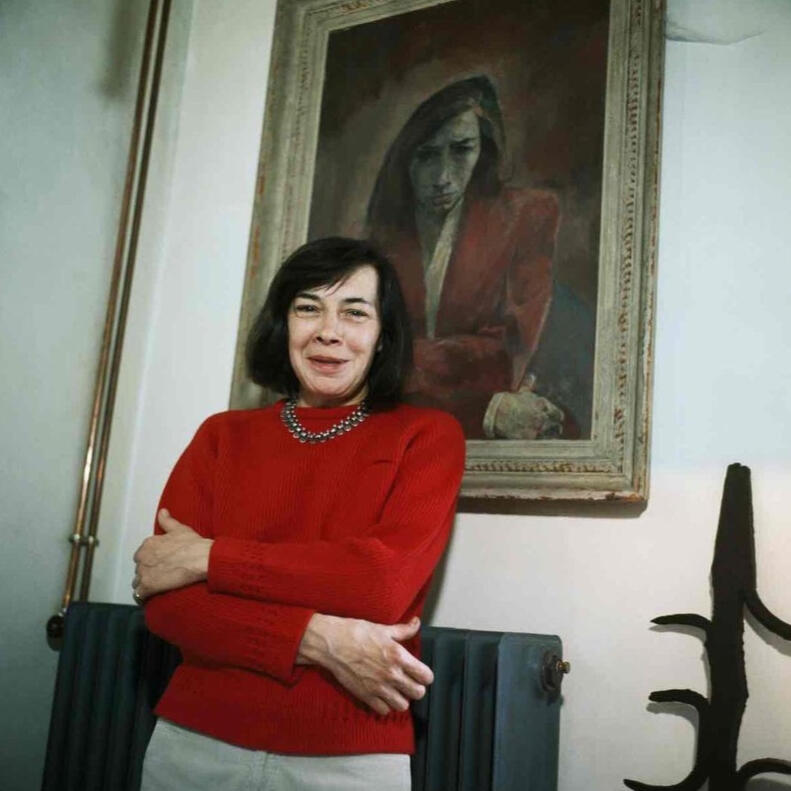
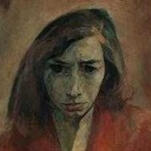
The story of the portrait painted by Allela Cornell is one of the most haunting and significant chapters in Patricia Highsmith’s life. The painting was not just a piece of art to Highsmith; it was a lifelong companion that she carried with her from New York to Mexico, France, and finally Switzerland.The Painting: "Portrait of Patricia Highsmith" (1943) Highsmith met Allela Cornell in May 1943, and the two began a brief but intense romantic relationship. During this time, Cornell painted Highsmith’s portrait, which captures the author in a way that many believe predicted her future literary persona.The Appearance: The large oil portrait depicts a young Highsmith dressed in a red jacket and a white blouse. Highsmith's complexion is famously tinged with an eerie green hue, and her eyes are described as "large, haunted, and owl-like."The "Evil" Quality: Highsmith herself was obsessed with the painting. She often remarked that it looked like someone who had "just come back from the grave." She felt the portrait captured something essentially "evil" in her face—a quality she later infused into her characters like Tom Ripley.A Lifelong Presence: The painting was always hung on the wall of whichever house Highsmith lived in. It served as a constant reminder of her youth and of the tragic woman who painted it. After Highsmith's death in 1995, the portrait became part of her estate and is held in the Swiss Literary Archives in Bern.Who was Allela Cornell? Allela Cornell (1914–1946) was a talented but deeply troubled American painter and illustrator. Though she showed great promise early in her career, her life was marked by poverty, depression, and tragedy.Her Art: Cornell was a pupil of influential artists like Yasuo Kuniyoshi and Alexander Brook. She was primarily a portraitist, working in both oil and watercolor. While she had some early success—winning a prize at the Golden Gate International Exposition in 1939—she struggled commercially. At her lowest points, she was forced to draw pen-and-ink portraits on New York sidewalks for a dollar each.Relationship with Highsmith: Highsmith was deeply in love with Cornell, writing in her diary: "I love Allela and God within her... she is the best!" However, their relationship was volatile, complicated by Cornell’s existing relationship with a woman named Tex Eversol.Tragic Death: In 1945, struggling with severe depression, Cornell attempted suicide by drinking hydrochloric acid (some sources say it was photographer's acid). She did not die immediately but spent a harrowing year as a "dying wraith," eventually passing away in October 1946 at the age of 32.Legacy: Highsmith was devastated by Cornell's death and remained haunted by her for the rest of her life. The American composer David Diamond, who lived with Cornell for a time, dedicated his Third String Quartet to her memory.The painting remains the most famous image of Highsmith, representing the bridge between her early romantic life and the "poet of apprehension" she would eventually become.
Why do you suppose Allela Cornell committed suicide?
The suicide of Allela Cornell is one of the most tragic and discussed events in Patricia Highsmith’s biographies, though the exact reasons remain a mix of documented facts and historical "supposition" by those who knew her. Biographers and contemporaries generally point to a "perfect storm" of three factors:1. Romantic Entanglements and Rejection: Cornell’s personal life was notoriously messy and overlapping. Highsmith’s primary biographer, Joan Schenkar, notes that Cornell was often caught in agonizing romantic triangles.The Highsmith/Eversol Triangle: In 1943, Highsmith fell in love with both Allela Cornell and Cornell’s girlfriend, Tex Eversol. This created an emotionally volatile environment. The "Final Straw": While Highsmith felt a lifelong guilt over the death, most evidence suggests Cornell's suicide was triggered by a different failed relationship. Specifically, she was reportedly devastated by the end of a relationship with another woman (sometimes identified as a final, crushing rejection) shortly before her attempt in 1945.2. Professional Frustration and Poverty: Despite her talent, Cornell struggled immensely to find commercial success. She lived in extreme poverty in New York, sometimes reduced to drawing sidewalk portraits for a dollar just to eat. The contrast between her high artistic standards (she was a pupil of the famous Alexander Brook) and the reality of her "starving artist" existence is believed to have fueled a deep sense of professional hopelessness.3. Severe Clinical Depression: Witness accounts from her roommate, the composer David Diamond, suggest that Cornell suffered from what we would today call clinical depression. Diamond recalled that she became increasingly "depressed" and withdrawn while he was away working. Her choice of method—drinking nitric (or hydrochloric) acid—was particularly violent and self-punishing. Highsmith and others interpreted this as a sign of profound self-loathing.The "Prophetic" Connection: Highsmith herself had a more "Highsmithian" supposition: she believed that Allela had glimpsed something dark and "evil" in the world (and in Highsmith herself) that she couldn't live with.Highsmith noted that the green-tinged portrait Cornell painted of her seemed to capture a "dead" or "ghoulish" quality. To Highsmith, the painting was proof that Cornell was already seeing the world through a lens of mortality and decay years before she actually took her life.The Tragic Timeline: The Attempt (1945): Cornell drank the acid in a woodshed. The Aftermath: She survived for a grueling year as a "dying wraith," unable to eat and weighing only 24 pounds by the end. Death (1946): She finally succumbed to the damage caused by the acid. Highsmith carried the guilt of this relationship for 50 years, and it is widely believed that the character of the artist Derwatt (the dead painter whose work is forged) in Ripley Under Ground was a direct tribute to Cornell's lost potential
How come Patricia Highsmith was biased against blacks and other minority groups?
Patricia Highsmith’s biases and prejudices are well-documented by her biographers and within her own voluminous personal diaries and notebooks. Her bigotry, which extended beyond racism to include anti-Semitism and xenophobia, was a complex and increasingly prominent part of her personality, particularly in the latter half of her life. Biographers and historians generally point to several factors that contributed to her world-view:1. Upbringing and Social Environment: Highsmith was born in Fort Worth, Texas, in 1921 and raised partly in New York. While she lived much of her life in cosmopolitan environments, she often carried the prejudices of her era and background. Some scholars suggest her biases were a "retention" of the casual bigotry common in early 20th-century America, which she failed to challenge as she matured.2. Radicalization through Isolation: As Highsmith aged, she became increasingly reclusive, eventually moving to isolated areas of Switzerland. This physical and social isolation seemed to fuel her misanthropy. Her diaries suggest that she spent a significant amount of time consuming fringe political literature and news, which reinforced her suspicions of "outsiders" and minority groups. She often viewed social changes and immigration as threats to the "ordered" European aesthetic she admired.3. Misanthropy as a Personality Trait: Highsmith was famously a misanthrope—someone who generally disliked humanity. While she had deep affections for a few individuals and a profound love for animals (especially her cats and snails), she held the general public in contempt. This general dislike of people often crystallized into specific, targeted hatreds against groups she deemed "other" or "inferior."4. Psychological Projection: Many literary critics have noted that Highsmith's characters, like Tom Ripley, are experts at "performing" identity while hiding a dark interior. Highsmith herself lived a "double life" for many years as a lesbian in a society that was deeply homophobic. Some psychologists suggest that her outward bigotry may have been a form of projection—deflecting the shame or "outsider" status she felt onto other marginalized groups to feel a sense of superiority or "belonging" to an elite class.5. The "Elite" Aesthetic: Highsmith was obsessed with a certain standard of high-culture, European intellectualism. She often equated "civilization" with a very narrow, white, Western European definition. In her mind, minority groups and non-Western cultures were often viewed as "shabby" or disruptive to the aesthetic and social order she prized. This is why she could admire a "Golden Boy" figure like the real-life inspirations for Dickie Greenleaf while expressing vitriol toward those who didn't fit that mold.The Contrast with Her Work: The paradox of Highsmith is that while she held these narrow-minded and hateful personal views, her writing demonstrated an incredible, nuanced understanding of the human psyche, guilt, and the "outsider" experience. She was able to empathize deeply with a murderer like Tom Ripley, yet failed to extend basic human empathy to real-world marginalized groups.In recent years, the publication of her Diaries and Notebooks: 1941–1995 has forced fans and scholars to confront these aspects of her life directly. They serve as a stark reminder of the "Highsmithian" theme that a person can appreciate great beauty and possess deep intellectual insight while simultaneously harboring a dark, disturbing interior life.
How come Patricia Highsmith developed such a negative outlook on humanity? When people get older, they volunteer, garden, travel, visit relatives, etc., and keep their outlook bright and their lives meaningful. Instead, Patricia Highsmith holed up in a house that resembled a brick castle.
The transformation of Patricia Highsmith from a brilliant young talent into a reclusive, misanthropic figure who spent her final years in a fortress-like home in Switzerland (Casa Tegna) is a subject of intense study by her biographers. While many people's lives "brighten" in old age through social connection, Highsmith’s life took the opposite trajectory due to a combination of deep-seated childhood trauma, psychological predispositions, and the isolating effects of her own fame and habits.1. The "Little Hell" of Her Childhood: Highsmith’s negative outlook was rooted in a foundational lack of love. Her biographers frequently point to her "destructive" relationship with her mother, Mary. Maternal Rejection: Her mother famously told Patricia that she had tried to abort her by drinking turpentine. This created a lifelong sense of being "unwanted." Abandonment: Highsmith was frequently left behind with her grandmother while her mother traveled for work or lived with a stepfather Patricia loathed. She later wrote, "I repeat the pattern... of my mother's semi-rejection of me. I never got over it." The Seeds of Misanthropy: These early betrayals led to a worldview where intimacy was synonymous with pain, and people were inherently untrustworthy.2. Abnormal Psychology and Early Interests: Highsmith was fascinated by the dark side of the human mind from a very young age. Freudian Influence: At age nine, she became obsessed with Karl Menninger’s The Human Mind, a book about abnormal psychology and mental disorders. The Psychopathic Mirror: She often wondered if she herself was a psychopath. This self-analysis fueled her creation of Tom Ripley—a character who, like Highsmith, lived as a "nobody" behind a mask of social mimicry.3. The Weight of Secrecy (The 1940s-50s): Coming of age as a lesbian in the mid-20th century added a layer of paranoia to her life. The Pseudonym Life: She published her iconic queer novel Carol (originally The Price of Salt) under a pseudonym for decades to protect her career. Conversion Therapy: She even underwent therapy to "cure" her sexuality, an experience that likely deepened her resentment toward societal norms and "polite" humanity.4. Alcoholism and Physical Decline: By middle age, Highsmith’s lifestyle was aggressively self-destructive, which directly impacted her mood and outlook. Chronically Unhealthy: She was a heavy alcoholic, drinking from breakfast until bedtime, and a chain-smoker (40 Gauloises a day). Isolation through Substance: Her heavy drinking made her abrasive, cruel, and difficult to be around, pushing away friends and lovers and reinforcing her solitude.5. Casa Tegna: The "Brick Castle": The house you mentioned—Casa Tegna in Switzerland—was the physical manifestation of her psychological state. Defensive Architecture: She largely designed the house herself. From the outside, it was a "low, white-winged building" that appeared to have no windows, resembling a bunker or a fortress. Separation from the World: She built a separate wing for guests specifically to keep them "far far away" from where she worked and lived. Preferred Companions: By this time, she openly preferred the company of animals (especially her pet cats and snails) to humans. She reportedly even smuggled her snails across borders in her bra.6. The Hardening of Bigotry: In her final years, Highsmith’s "negative outlook" curdled into virulent bigotry. Her diaries from the 1980s and 90s contain shocking racist and anti-Semitic rants. Biographers suggest this was the final stage of her misanthropy: having been rejected by the "ordered" world of her youth, she turned her hatred toward any group she perceived as an "other" or a threat to her narrow, aesthetic definition of civilization.While most people seek a "meaningful" life through relatives and travel, Highsmith found meaning in sublimation. She took her "unacceptable" feelings of hatred and envy and turned them into some of the greatest suspense literature of the 20th century. Her castle in Switzerland wasn't just a home; it was a sanctuary where she could finally be the "nobody" she felt herself to be.
I heard that Patrica Highsmith was cheap while living in Casa Tenga. She used a flashlight because electricity was expensive, served cheap food and wine to guests, and didn't maintain her yard. Why do you supposed this? Who wants to die the richest person in the graveyard?
The paradox of Patricia Highsmith’s later years at Casa Tegna—living like a pauper while her royalty accounts swelled—is one of the most stark examples of her complicated psychology. Her choice to live in semi-darkness, drinking vinegar-grade wine while sitting on a significant fortune, wasn't just about the money itself; it was about a deep-seated set of anxieties and a lifelong philosophy of "the outsider." Here is why she likely chose to live that way:1. Poverty as a Permanent Mental State: Highsmith lived through the Great Depression and spent her early career as a struggling comic book writer and freelancer in New York. For many who experience formative years of financial insecurity, that "survival mode" never truly switches off. Even when she became significant in terms of wealth, her internal ethos still felt the phantom threat of being penniless. To her, every kilowatt of electricity saved was a defensive move against a world she felt was constantly trying to take from her.2. The "Fortress" Mentality: Highsmith’s house was designed to be a bunker. By keeping the lights off and the yard overgrown, she wasn't just saving money—she was practicing stealth. Like Tom Ripley, Highsmith was obsessed with the idea of being "unobservable." A dark, unkempt house does not attract visitors, fans, or the "shabby" humanity she so despised. Her frugality was a tool for isolation.3. Frugality as a Form of Control: Highsmith was a woman who felt very little control over her emotional life, her relationships, or her physical health (due to her heavy smoking and drinking). However, she could control every cent that left her pocket. Serving guests cheap wine was a way of asserting dominance—showing them that she didn't value their presence enough to "waste" good resources on them. It was a manifestation of her misanthropy.4. The "Puritan" Masochism: There was a streak of asceticism in Highsmith. She didn't believe life was supposed to be comfortable or "bright." She found a certain grim satisfaction in the struggle. This is a common theme in her books: characters who are most comfortable when they are under pressure or living in Spartan conditions. The flashlight and the cold house were part of her "discipline."5. Who wants to die the richest person in the graveyard?
Your question touches on the ultimate irony of her life. Highsmith had no heirs she cared for and very few friends left at the end. She didn't want to "die rich" for the sake of the status; she wanted to own her autonomy until the very last second. For her, money wasn't for spending; it was a "scorecard" that proved she had successfully outmaneuvered a world that she believed had rejected her from birth.Strategic Comparison: The "Ripliad" Connection. This is a fascinating point of contrast. Tom Ripley uses wealth to buy the perfect lawn, the best harpsichord, and the finest wine. He uses money to build a mask that is beautiful and inviting. Patricia Highsmith used that same wealth to build a fortress that was dark and repellent. She essentially funded her own disappearance. She didn't want to be the richest person in the graveyard for the glory; she just wanted to make sure she didn't owe anyone anything when she got there.
Was Marc Brandel's book, "The Choice" a swipe at Patricia Highsmith, given their unsuccessful relationship and Patricia's unkind gossiping about him?
The direct biographical link between Marc Brandel’s 1950 novel The Choice (later republished in paperback as The Moron) and his relationship with Patricia Highsmith is well-established by literary historians and Highsmith biographers. It is widely considered an act of thinly veiled creative retaliation.The context of their disastrous engagement explains how their real-life friction translated directly into his book.The Real-Life Trainwreck:Brandel and Highsmith met at the Yaddo artists' colony in 1948. Despite Highsmith being openly honest with Brandel about her homosexuality, Brandel became infatuated and proposed to her multiple times.Highsmith, intensely conflicted and feeling societal pressure to conform, actually checked herself into psychoanalysis for six months to try and "cure" herself so she could marry him. However, the physical reality of the relationship repulsed her; she famously wrote in her diaries that sleeping with him felt like "steel wool in the face" and described feeling like she was in a prison.The relationship ended brutally in 1949/1950 when Highsmith sent Brandel a savage telegram from Marseille, essentially telling him that their engagement was a delusion on his part and physically repulsive to her. To add insult to injury, she immediately embarked on a highly passionate affair with Kathryn Hamill Cohen and began gossiping about her time with Brandel to their mutual literary circles.How it Manifested in The Choice:Brandel, a talented novelist and later a prolific television screenwriter, channeled his humiliation and anger directly into The Choice, which was published in 1950—the exact year their breakup was finalized.The Plot: The novel centers on a menacing, psychopathic character who threatens a group of sophisticated, bohemian New York types.The Highsmith Caricature: Within the book, Brandel constructs characters that take direct aim at the Greenwich Village/bohemian literary crowd Highsmith ran in. More importantly, biographers note that the underlying psychological themes of deceit, repressed abnormality, and malicious social posturing were written with Highsmith's icy, double-life persona fresh in his mind.The Retaliatory Subtext: By portraying a social circle disrupted by a manipulative, dangerous undercurrent, Brandel was effectively firing back at Highsmith's "performative cruelty" and the elite, mocking attitude she and her friends had directed toward him after she broke off the engagement.While Highsmith used her real-life obsession with Kathryn Hamill Cohen to fuel the high-society longing of The Talented Mr. Ripley, Brandel used his rejection by Highsmith to fuel a darker, more bitter piece of mid-century psychological fiction.
Favorite Videos
Movies adapted from her novels (minus Talent Mr. Ripley)
Two Faces of January A charismatic con man and his wife are vacationing in Greece when they become entangled with a young tour guide after a suspicious death at their hotel. The three are forced into a tense, paranoid flight across the Mediterranean as their loyalties shift and a dangerous web of deceit threatens to destroy them all.
Carol (The Price of Salt) This 2015 film starring Cate Blanchett and Rooney Mara is perhaps her most famous non-thriller. It follows the forbidden romance between a glamorous older woman and a young shopgirl in 1950s New York. Unlike her other works, this story is noted for its more hopeful tone.
Strangers on a Train The definitive 1951 adaptation directed by Alfred Hitchcock. It remains a classic of the noir genre, centered on two strangers who meet on a train and "trade" murders so that neither can be linked to their victim. It is widely considered one of the best Highsmith adaptations ever made.
A Kind of Murder (based on The Blunderer) This 2016 film stars Patrick Wilson and Jessica Biel. Set in 1960s New York, it follows a successful architect who becomes obsessed with an unsolved murder case, leading him into a spiral of suspicion and deceit when his own wife is found dead.
Deep Water The 2022 version: Starring Ben Affleck and Ana de Armas, it focuses on a husband who allows his wife to have affairs to avoid a divorce, only to become the prime suspect when her lovers start disappearing.
Deep Water 1981. A French adaptation starring Isabelle Huppert, which many critics find captures Highsmith’s original "coldness" more effectively.
The Cry of the Owl The 2009 version starring Julia Stiles and Paddy Considine. It tells the unsettling story of a man who stalks a woman, only for the two to form an unexpected bond that leads to a violent confrontation with her ex-fiancé.
The Cry of the Owl The 1987 French version: Directed by Claude Chabrol.
This Sweet Sickness Dites-lui que je l'aime (1977): A French film starring Gérard Depardieu. It’s an intense study of obsession where a man builds a house for a woman who has already moved on and married someone else, leading to a tragic breakdown of reality.
Enough Rope (based on The Blunderer) Le Meurtrier (1963): Another French adaptation of The Blunderer, which shows just how much European cinema (particularly the French New Wave era) embraced Highsmith’s cynical view of human nature.
The Glass Cell (1978): A German film based on her novel of the same name. It is a grueling look at how the prison system destroys a man's soul, which resonated with her interest in the mechanics of guilt.
Edith's Diary A German film, based upon the novel of the same name.
Les Biches Loosely based upon The Talented Mr. Ripley, except with the genders reversed.
Once You Kiss A Stranger, loosely based upon Strangers Upon a Train
Visakha Express An Indian film also based upon Strangers Upon a Train
A Mighty Nice Man, a short film based upon Highsmith's short story.
The Terrapin, a Canadian short story based upon a novel of the same name.
Selected Links
The Talented Ms. Highsmith: I worked for the novelist in her final months. I thought she wanted to kill me.A Look Into the Dark Inner World of Patricia HighsmithA Dissatisfaction with LifeUntangling the contradictions of crime novelist Patricia HighsmithPatricia Highsmith in TicinoThe last house Patricia Highsmith lived in. True to her personal style, the house was a minimalist, fortress-like structure made of concrete and stone. She commissioned the architect Tita Carloni to design it specifically to her needs, which included a vast, open living space, a central fireplace, and a large study where she kept her famous Olympia typewriter and the portrait by Allela Cornell. The house was designed with very few windows facing the street, reflecting her deep desire for privacy and her somewhat reclusive nature during her final years. After she passed away, the house was sold, but it remains a significant site for those interested in her life and the austere environment she chose for her final creative period.The talented Ms Highsmith’s life in ‘club-like’ Switzerland
Loving Highsmith
Biographies
Beautiful Shadow: A Life of Patricia Highsmith by Andrew Wilson (2003) This is widely considered the definitive, authorized biography. Wilson was the first researcher to have full access to Highsmith’s private archives and diaries after her death in 1995. It provides a comprehensive look at her childhood in Texas and New York, her turbulent relationship with her mother, and her secret life as a lesbian in a more repressive era. It also goes into detail about the real-life inspirations behind Tom Ripley.
The Talented Miss Highsmith: The Secret Life and Serious Art of Patricia Highsmith by Joan Schenkar (2009) Schenkar’s biography is famous for its non-linear approach and its focus on Highsmith’s obsessions. It explores her work in the comic book industry (which Highsmith was famously reticent to discuss), her various romantic entanglements, and her move to Europe. Schenkar spent years interviewing Highsmith’s former lovers and associates to piece together the "secret" parts of her life.
Patricia Highsmith: Her Diaries and Notebooks: 1941-1995 While not a traditional biography, this massive volume (edited by Anna von Planta) is essentially an autobiography in her own words. It contains over 50 years of her private thoughts, spanning from her student days at Barnard to her final years in Switzerland. It is perhaps the most unfiltered look at her creative process and her internal struggles.
Highsmith: A Romance of the 1950s by Marijane Meaker (2003)
This is a memoir written by fellow author Marijane Meaker (who wrote under the name Vin Packer), who had a significant romantic relationship with Highsmith in the late 1950s. It offers a more intimate, personal look at Highsmith during the height of her fame. It captures her personality, her drinking habits, and the atmosphere of the New York literary and lesbian social circles of the time.
Devils, Lusts and Strange Desires: The Life of Patricia Highsmith by Richard Bradford (2021)
One of the more recent biographies, this book takes a somewhat harsher look at the author's legacy. Bradford examines the darker sides of her personality, including her well-documented misanthropy and controversial political views, while analyzing how those traits fueled the dark morality of her fiction.
Disclaimer: This is an unofficial, non-commercial fan site. It is the product of a lone individual and is not affiliated with, authorized by, or endorsed by the Patricia Highsmith estate or any associated copyright holders